PP Corrugated Tubing Manufacturing Process — EV Orange Grade
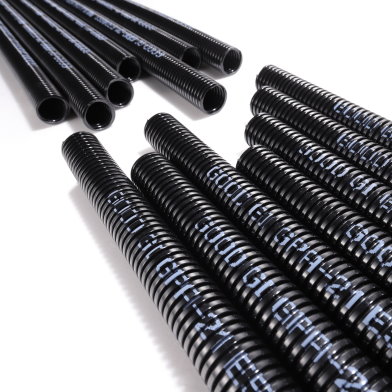
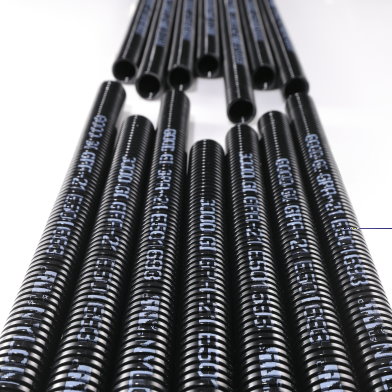
A full production walkthrough of Good Gi PP polypropylene corrugated tubing — from raw material extrusion to finished tube — so you can see Taiwan-made quality standards firsthand.
Source: Good Gi Co., Ltd. Official YouTube Channel
Key Features
-
Built to International Standards: Nylon (PA) grades are manufactured in accordance with UL 1696 mechanical protection tubing standards; PP grades use resin rated to UL 94 V-0 and meet FMVSS 302 horizontal burn requirements. All grades are RoHS and REACH compliant. Test reports available on request.
-
Impact & Heat Resistance: Plastic grades rated −40 °C to 125 °C; metal flexible conduit handles extreme heat and electromagnetic interference.
-
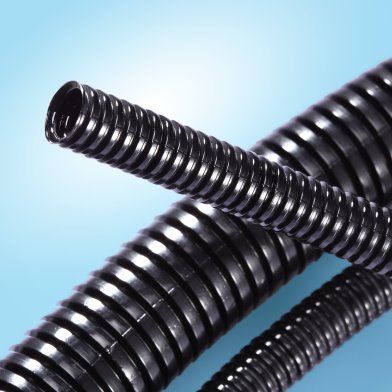
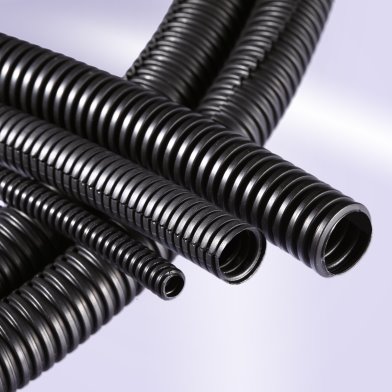
High Flexibility: Corrugated walls allow free bending in any direction — ideal for complex routing paths and tight installation spaces.
-
Multiple Material Options: Nylon (PA), PP polypropylene, chemical-resistant grades, and galvanized metal flexible conduit — one supplier for every operating environment.
-
Taiwan-Manufactured: In-house tooling and quality control ensure consistent lead times and support for high-volume custom orders.
-
Complete Processing Services: Cut-to-length, longitudinal slitting, and custom packaging reduce downstream prep work and total procurement cost.
Application Areas
-
Semiconductor & Electronics Equipment: Protects precision harnesses in cleanrooms and high-accuracy machinery. RoHS compliance is mandatory; Nylon (PA) corrugated tubing, manufactured to UL 1696 mechanical protection tubing standards, is the primary choice.
-
Energy & Power Equipment: Used in power control panels, new-energy systems, and power unit wiring — where heat resistance and chemical durability are critical. PP or metal conduit selected by environment.
-
Automation & Machine Tools: Shields internal wire harnesses against repeated flexing and elevated temperatures, extending harness service life.
-
Automotive Wiring & Electrical Insulation: Grades meeting FMVSS 302 horizontal burn requirements are widely used in engine compartment, door, and dashboard harness protection.
-
Construction & Outdoor Wiring: High protection ratings suit underground conduit runs and outdoor exposed installations — dust-proof, moisture-resistant, and weather-durable.
-
Chemical Industry & Harsh Environments: Chemical-resistant PP grades withstand acid and alkali exposure, keeping precision circuits stable in aggressive industrial environments.
Recommended Corrugated Tube Cutting Machines
Frequently Asked Questions
Q: Nylon (PA) vs. PP Corrugated Tubing — Which Should I Choose?
A: Start with the environment, then the mechanical load. Choose Nylon/PA (GPA) where abrasion resistance, impact strength, and mechanical durability matter — robotic arms, cable chains with repeated travel, and harnesses that flex constantly inside equipment. Rated −10 °C to 120 °C and manufactured to UL 1696 mechanical protection tubing standards. Choose PP (GR) where chemical resistance, low-temperature tolerance, or cost control lead — chemical plants, outdoor low-temperature runs, and automotive harnesses. Rated −40 °C to 125 °C and meets FMVSS 302 horizontal burn requirements. Quick rule: heavy movement and abrasion → PA; chemicals and cold → PP. For a full side-by-side comparison, see Nylon (PA) vs. PP Corrugated Tubing — Material Comparison Guide.
Q: How Do I Select the Right Corrugated Tube Size?
A: The basic rule: the wire harness OD should not exceed 60–70% of the tube's inner diameter. Divide the harness OD by 0.65 to get the minimum recommended ID (example: 12 mm harness OD → choose ID ≥ 19 mm), then pick the nearest standard size from the supplier's catalog. If you anticipate adding cables later, go one size up. For a complete sizing walkthrough, see How to Select the Right Corrugated Tube Size and Specifications.
Q: What Do UL, RoHS, and REACH Mean for Corrugated Tubing Procurement?
A: These are separate systems covering different markets. UL 1696 is the mechanical protection tubing (MPT) standard, covering support, routing, and mechanical protection of wires and cables — the reference point for North American equipment wiring. UL 94 V-0 is a plastics flammability rating requiring self-extinguishing within 10 seconds. FMVSS 302 is the US automotive horizontal burn requirement. RoHS restricts 10 hazardous substances including lead, mercury, and cadmium; REACH controls substances of very high concern (SVHC) — both are legal requirements for exporting to the EU and UK. Confirm your target market first, then ask the supplier for the matching test reports and their validity dates. For a real-world application example, see Nylon Corrugated Tubing Applied in Automation Control Panels.
Not Sure Which Grade or Size to Specify? Let Our Engineers Help.
Share your application requirements and certification needs — we'll recommend the right product and arrange samples.


-80x80.png?v=1739004734)
-80x80.jpg?v=1653894721)


