Background: why build your own line
Burkar manufactures wire protection materials in Turkey. High-temperature insulation products like fiberglass silicone sleeving had to be imported, which meant lead times, exchange rates, and customisation flexibility all sat with suppliers overseas.
If you want control over your own product quality and supply schedule, producing locally is the only real fix. But fiberglass silicone sleeving is not a process you cross into by buying a few machines.
The challenge: making two processes line up
Fiberglass silicone sleeving is made in two stages, layered on top of each other:
- Braiding the fiberglass sleeve — glass yarn is braided into a continuous hollow sleeve with a stable inner diameter. Tension and braid density decide how uniform the finished sleeve is.
- Silicone coating — silicone is applied evenly over the braided sleeve and cured. Coating thickness, adhesion, and curing conditions determine the sleeve's temperature rating, voltage rating, and weather resistance.
The parameters for the two stages have to match each other. Braid density, coating viscosity, oven temperature — move any one of them and the insulation class and surface finish start drifting. For a line being built from scratch, the real bottleneck is not sourcing the equipment. It is dialling in parameters that nobody has handed you.
What Good Gi delivered
Burkar was not buying machines. What Good Gi delivered came in three parts:
Hardware | custom-built equipment
Braiding and coating equipment designed around Burkar's floor space, output targets, and available power supply. There is no standard model here, because ceiling height, column spacing, and electrical capacity differ at every plant.
Software | process parameters
Braiding tension, coating viscosity, curing temperature curve. All three have to work together before the output is stable. Good Gi handed Burkar parameters that were already proven, which took the trial-and-error phase off the schedule.
People | installation and training
Good Gi's team travelled to Turkey to complete installation, wiring, and commissioning, then trained Burkar's operators hands-on — startup, parameter adjustment, routine maintenance. The know-how has to stay on site. It only counts once the local team can run the line without us.

Figure: June 2026 — the Good Gi team and Burkar after commissioning the line in Turkey
Avatars in the team photograph use Big Smile by Ashley Seo, licensed under CC BY 4.0.
What a sleeving supplier hands over is usually the product itself. Good Gi can hand over how it is made as well.
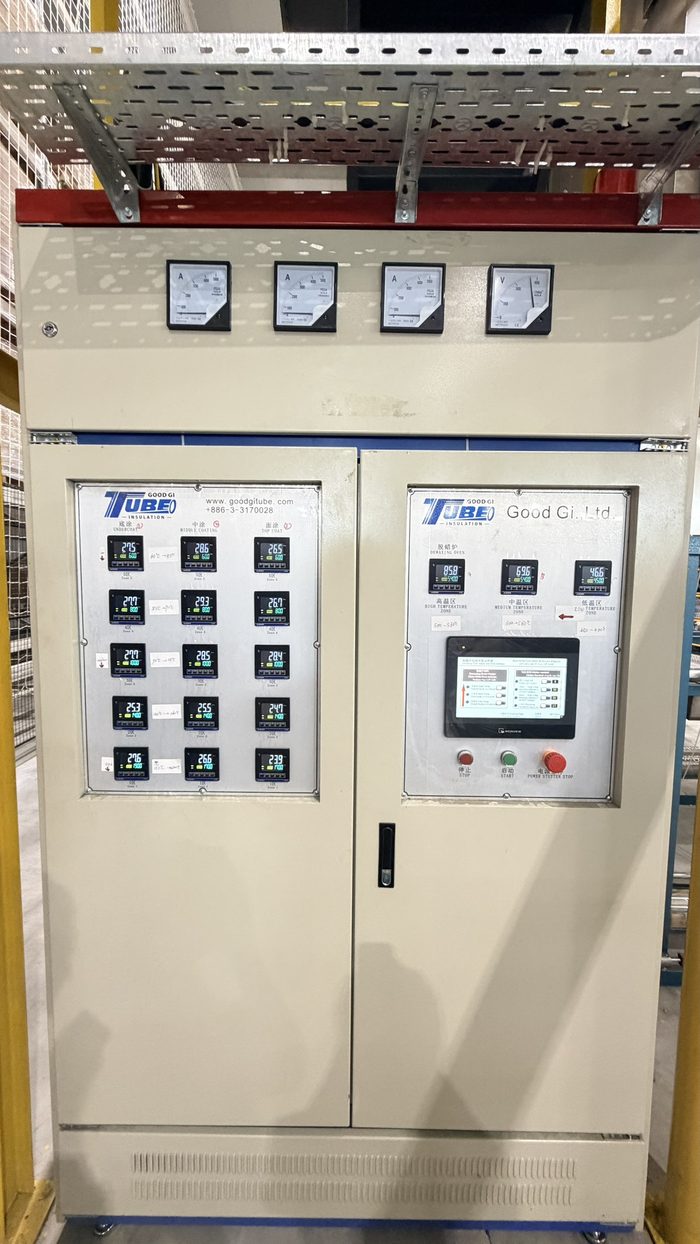
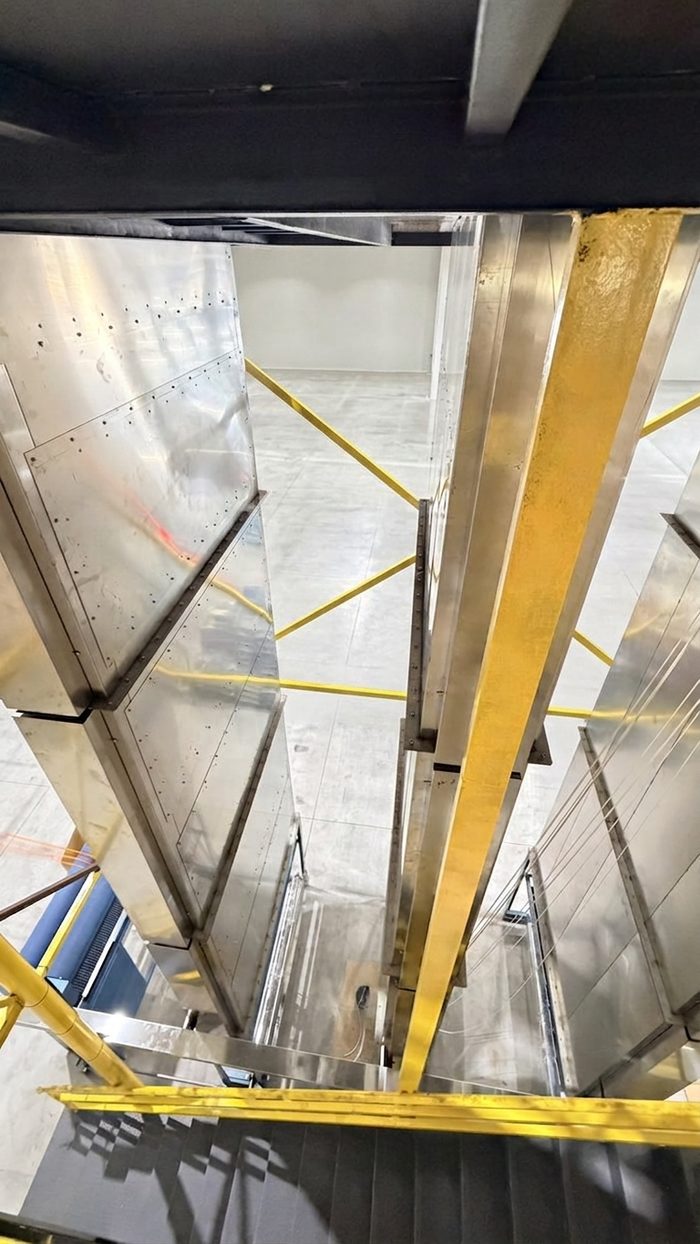
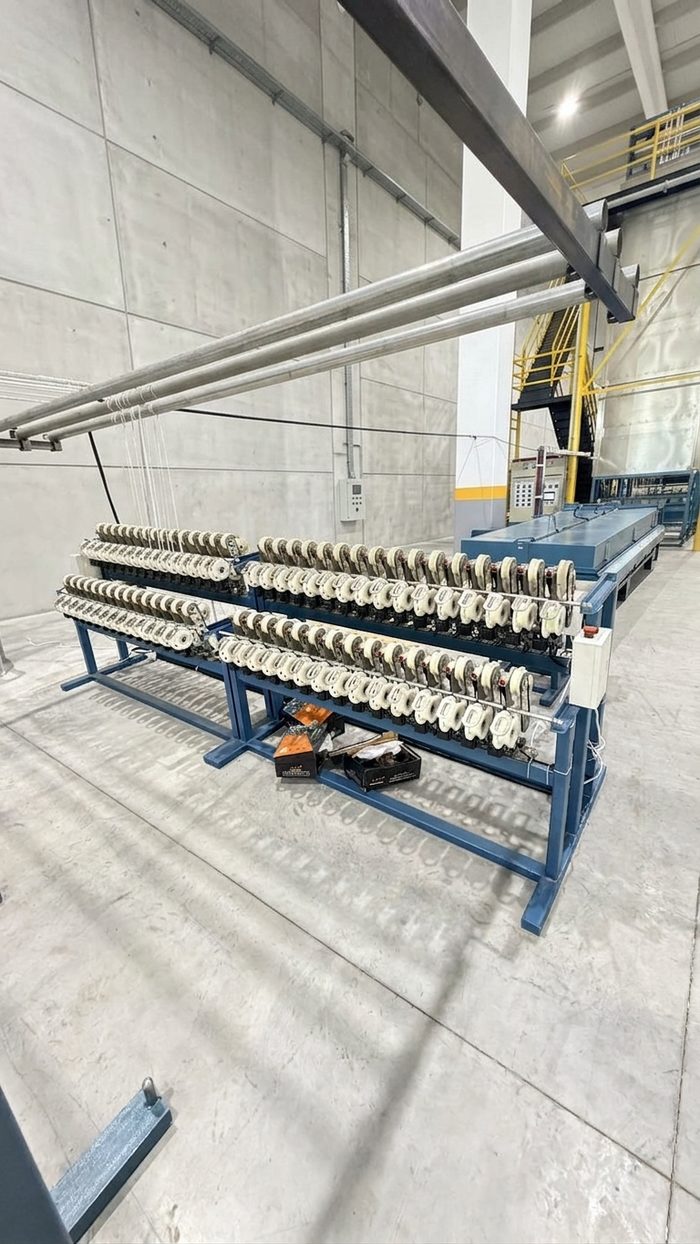
Figure: On site at Burkar — line control panel, vertical coating and curing tower, fiberglass yarn creel
This is Burkar's configuration. Your line would be planned around your own floor space, output target, and power supply — we do not work from a standard model.
The result: production in Turkey
The full process, from braiding the fiberglass sleeve through to silicone coating and curing, now runs on Burkar's own line. Import lead times and currency swings no longer set the schedule. At full capacity the line can produce up to 2 million metres a year, and supply timing is back in Burkar's hands.

Figure: Fiberglass silicone sleeving, close up — the cut end shows the braided glass core and the silicone coating over it
Fiberglass silicone sleeving specs
The table below covers Good Gi's standard fiberglass silicone sleeving (GF series) — the specification range this line is built to produce.
| Item | Specification |
|---|---|
| Product | Fiberglass Silicone Sleeving (GF series) |
| Construction | Braided fiberglass sleeve + silicone coating |
| Size range | 1–40 mm inner diameter |
| Temperature rating | 200°C (silicone-coated series); Good Gi's full fiberglass sleeving range covers 200–650°C |
| Voltage rating | Graded by model: 1.5 / 2.5 / 4 / 7 kV (GF-15 / GF-25 / GF-40 / GSRT-70) |
| Compliance | UL, RoHS, REACH |
| Materials | Fiberglass yarn + high-temperature silicone |
Full specifications and model list on the Good Gi product page: www.goodgitube.com/en-gb/Fiberglass_sleeving_2
What this case means for you
For procurement and engineering
A supplier that can build the entire production line and train the customer to run it shows you how far its grasp of the process, the parameters, and the variables behind quality actually goes. Even if you are only buying finished sleeving, whether a supplier can tell you which parameters govern batch-to-batch consistency is something worth judging them on.
For those weighing local production
Good Gi can transfer the whole package: equipment, process, and operator training. Burkar is a working example of it.